
Marketing has become the business of more. More campaigns. More channels. More automation. More optimization. In the process, we’ve become fundamentally unmoored.
On the surface, this should translate into stronger (more) results. In reality, it creates the opposite effect.
The problem with “more” is that it usually creates more silos — siloed workflows, siloed data, and disconnected processes that fragment the consumer experience. Each channel is optimized in isolation. Each campaign is measured on its own terms. And while activity increases, relevance becomes harder to maintain, and the path to conversion becomes a guessing game.
It’s a structural issue. Most marketing systems were built for yesterday — when consumers followed predictable, linear journeys. Today’s (and tomorrow’s) consumer journeys are fragmented, non-linear, and shaped by real-time context.
When systems can’t interpret and act on consumers’ behavioral signals — browsing, hesitating, comparing, abandoning, or returning — teams default to what they can control: volume. More messages. More campaigns. More touch points.
But more marketing doesn’t automatically lead to better outcomes — especially when your systems can’t respond precisely or capture a holistic view of the customer. In fact, this approach just adds noise instead of clarity.
It's time to pivot to an Intent-Driven Marketing model
Intent-Driven Marketing is straightforward: Relevance comes from understanding what a consumer is ready to do next — not from assumptions about who they are.
Rather than relying on static segments or calendar-based triggers, Intent-Driven Marketing targets consumers in real time based on behavioral signals that reveal purchase intent. It enables marketers to quickly reach ready-to-buy audiences with timely, personalized messages using behavior data.
At a practical level, this means shifting from rote execution to dynamic engagement.
And the important thing to recognize is that intent isn’t abstract or hidden. This model simply underscores the necessity and advantage of capturing intent early by paying attention to everyday consumer-brand interactions such as:
- Repeated product or category views
- On-site search behavior
- Cart activity and abandonment patterns
- Changes in browsing or engagement frequency
These signals ebb and wane quickly. They reflect readiness, hesitation, or momentum — not just general interest. The value of Intent-Driven Marketing lies in recognizing these signals as they emerge and acting on them immediately, not after the moment has passed.
Demographics and surface-level metrics aren’t going to cut it
For years, demographics and surface-level engagement metrics have guided how marketers target, personalize, and measure success. But those signals were never designed to reflect real-time readiness — and that gap is now impossible to ignore.
Demographics tell you who someone is. They don’t tell you where that person is in their decision-making process right now. Static segments assume intent is stable, when in reality it’s fluid — rising, stalling, or fading based on context.
The same is true for common engagement metrics. Opens, clicks, and activity rates show that something happened. They don’t indicate what’s likely to happen next. By the time those metrics are analyzed, the moment that mattered has already passed.
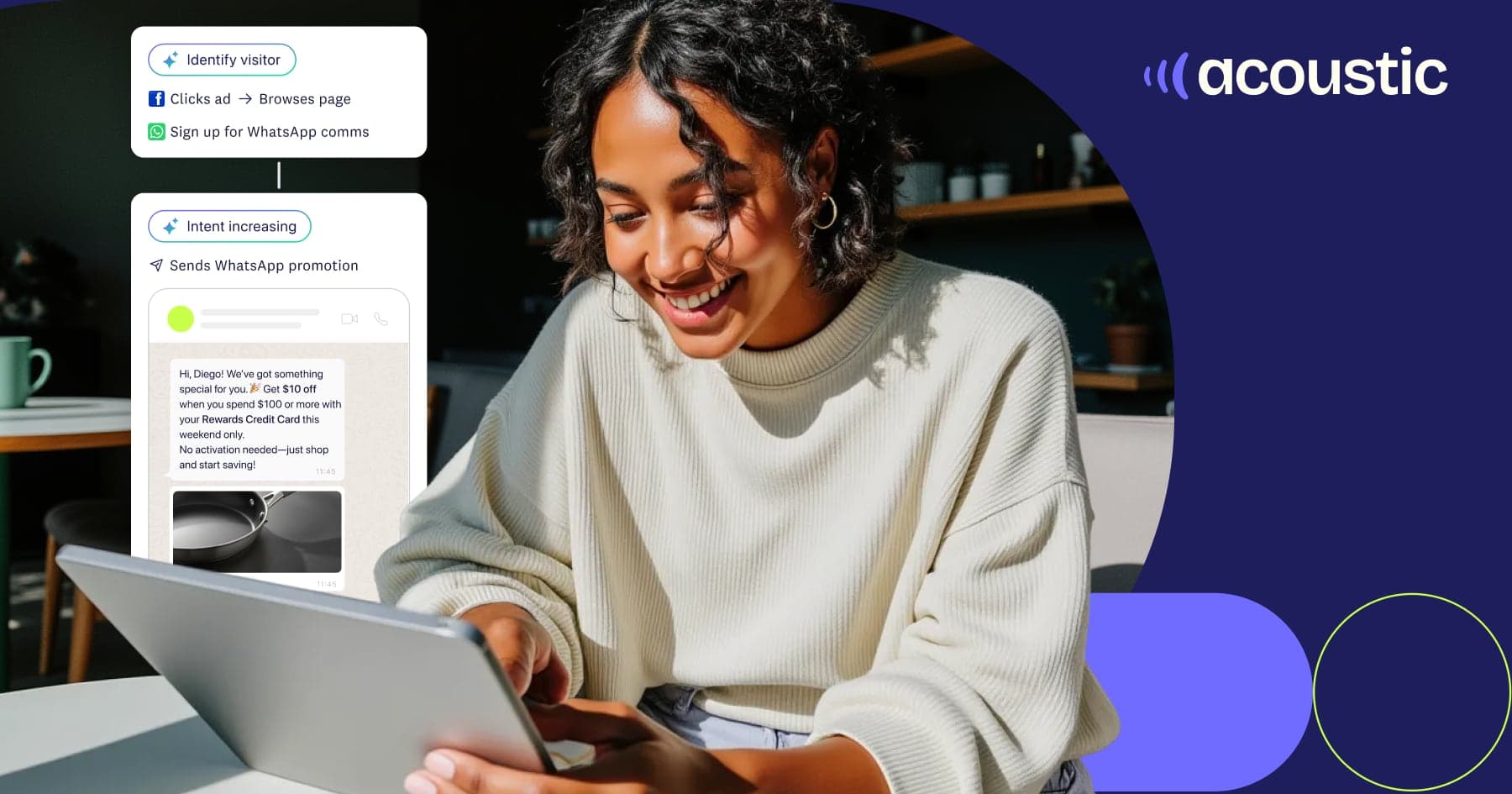
The difference becomes clear when you compare demographic-based targeting to intent-based resonance. A demographic approach might trigger a generic product recommendation because someone fits a profile. An intent-driven approach recognizes that a customer added items to their cart, stalled at checkout, and may be hesitating on price — prompting a timely cart message or tailored offer that reflects that specific moment.
Intent can be identified earlier thanks to a plethora of available data. Now, marketers can capture it while decisions are still forming, not after they’re finalized. Acting on intent makes relevance possible through timing and context — not just targeting — allowing marketers to engage with precision instead of relying on volume.
How to move from activity to impact
In theory, Intent-Driven Marketing is a no-brainer. Most marketers agree with the philosophy. The challenge is execution.
To work in practice, Intent-Driven Marketing requires systems designed to continuously identify, interpret, and act on intent in real time. Most MarTech stacks struggle here because they were built for campaign planning and post-campaign analysis — not for ongoing intent recognition.
As a result, key behavioral signals are fragmented across channels and tools. Insights arrive too late. Action depends on disconnected workflows. Even when teams recognize intent, they often can’t act on it fast enough — or at all.
Moving from activity to impact requires a purpose-built foundation for Intent-Driven Marketing.
That’s where Acoustic Connect comes in. Acoustic Connect is a customer engagement platform designed to support the next evolution of digital marketing. Through purpose-built modern architecture and AI, it makes Intent-Driven Marketing possible — capturing first-party behavioral signals natively in one single platform, understanding intent as it forms, and enabling timely, personalized engagement across channels.
When systems are designed for intent — not just activity — marketing shifts from doing more to acting with precision and revenue is no longer a surprise; it’s a result.